Ecological challenge: a giant belt of seaweed is rapidly expanding in the Atlantic
Scientists report a record expansion of the sargassum seaweed belt, driven by excessive nutrient runoff into the global ocean.
 🎓Education
Photo: UNIAN
Key points
- Record seaweed belt reached 8,850 km
- Excess nitrogen and phosphorus stimulate growth
- Decomposing seaweed releases toxic hydrogen sulfide
- Need for international ocean monitoring
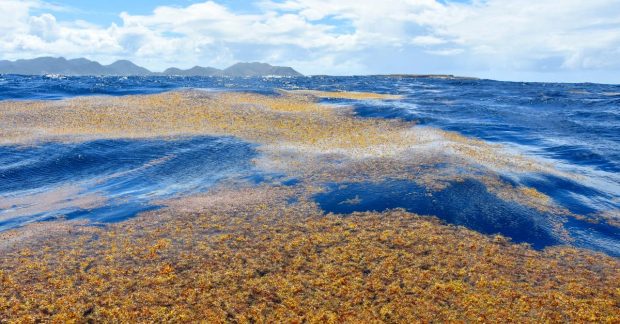
An anomalous growth of the pelagic sargassum population is being observed in the Atlantic Ocean. According to satellite observations, the area of this seaweed accumulation, known as GASB, reached a record 8,850 kilometers in 2025. This phenomenon, which began to reach alarming proportions in 2011, is turning a once-local ecosystem into a major global environmental factor.
Causes and consequences of sargassum expansion
Researchers link the rapid proliferation of the seaweed to an excess of nitrogen and phosphorus in the water. These substances enter the ocean through both natural processes and human activities, such as agricultural runoff, sewage discharge, and atmospheric deposition. The Amazon River basin plays a key role in this process, as its floods saturate ocean waters with nutrients.
While sargassum serves as a natural habitat for many marine species, its excessive concentration is becoming a serious issue. When washed ashore, large masses of seaweed decompose, releasing toxic hydrogen sulfide and greenhouse gases. This not only harms the local economy and tourism industry but also creates so-called "dead zones" that destroy coral reefs and marine life.
Source UNIAN — unian.ua/ecology/sargasovi-vodorosti-v-atlantici-chomu-gigantskiy-p… ↗
Read next
 🇺🇦Ukraine
US Director of National Intelligence: Putin is not America's friend regarding the war in Ukraine
Director of National Intelligence Jay Clayton clarified that despite diplomatic rhetoric, the US intelligence community views Russia's actions in Ukraine as hostile.
 🛡️Security
Tragedy in Dymer: Death toll from Russian attack rises to eight
Rescuers have recovered the eighth body from the rubble of a destroyed building in Dymer, Kyiv region.
 👥Society
Clashes at Kyiv Pechersk Lavra: Police Launch Investigation
A conflict erupted at the Kyiv Pechersk Lavra over the use of religious buildings. Police have received statements from participants and are investigating the incident.
 🚌Transport
ISW analysts assess the viability of humanitarian corridors on the front line
The Institute for the Study of War explains why the proposal for evacuation from Kostiantynivka is unfeasible compared to Ukraine's initiative for the Kherson and Zaporiz…
 🛡️Security
Oil refinery in Novoshakhtinsk, Russia, hit by another attack
A drone strike hit the Novoshakhtinsk oil refinery in Russia's Rostov region on November 23, targeting a facility that supplies fuel to the Russian military.
 🚨Events
Fatal shooting in Kharkiv: police launch special operation
On the evening of November 22, a shooting occurred in Kharkiv, resulting in the death of a man found by police at the scene.