NASA's Technological Leap: Seven Key Innovations for a Permanent Moon Base
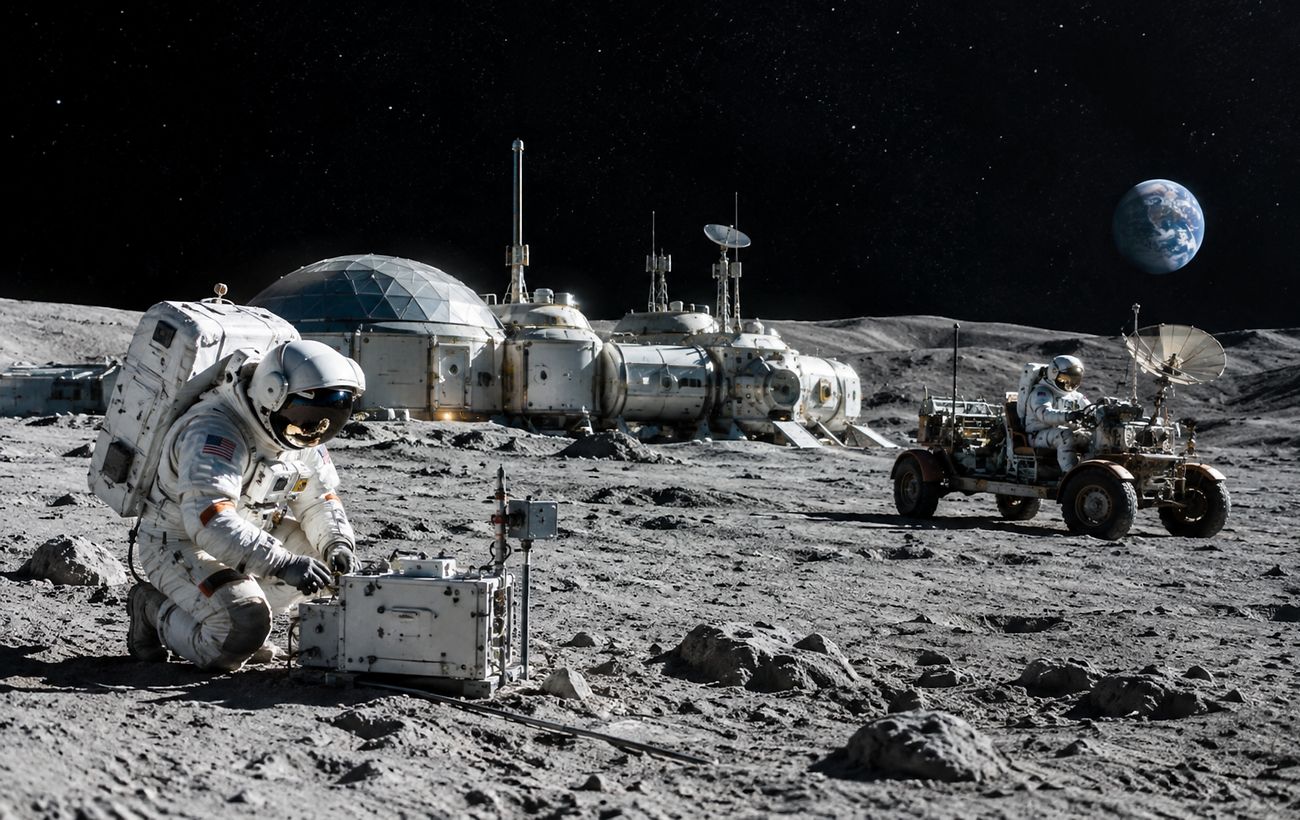
NASA is actively developing seven critical technologies, ranging from nuclear reactors to radiation shielding, to enable long-term human presence on the Moon.
 💡Tech
Photo: RBC-Ukraine
Key points
- NASA plans to deploy a compact nuclear reactor on the Moon by 2030.
- ISRU technology will enable astronauts to harvest water and oxygen locally.
- New shielding methods are being developed to combat sharp lunar dust and cosmic radiation.
Establishing a permanent human settlement on the Moon requires overcoming unprecedented engineering challenges. NASA and international researchers are focusing on seven foundational technologies to ensure that astronauts have reliable sources of power, water, and protection.
Power generation remains a major hurdle since lunar nights last about two weeks. To guarantee a stable electricity supply, engineers are designing compact nuclear reactors, aiming to deliver the Lunar Reactor-1 by 2030. Additionally, utilizing in-situ resource utilization (ISRU) will allow missions to harvest water ice from permanently shadowed craters at the south pole and extract oxygen from lunar regolith.
Life support systems must also evolve to recycle water and air with minimal maintenance over years of operation. Furthermore, mitigating the hazards of abrasive lunar dust and intense cosmic radiation is vital, prompting the development of electrostatic shielding and regolith-covered habitats.
Source RBC-Ukraine — rbc.ua/ukr/news/vid-dernogo-reaktora-5g-shcho-potribno-nasa-1794836… ↗
Read next
 🎓Education
American Experience: Why the US Army is Adopting Ukrainian Drone Training Methods
A US Army representative visited the Ukrainian UAV academy Killhouse twice, prompting the US military to adapt its own training programs to real-world conditions.
 🛡️Security
Consequences of enemy attack in Kyiv region: casualties reported
A Russian strike in Vyshneve resulted in one death and three injuries. Civilian infrastructure, including a store, was damaged.
 👥Society
How Much Water to Drink Daily for Healthy Blood Pressure: Cardiologists' Advice
Renowned cardiologists and vascular surgeons explain how proper hydration affects blood pressure and share recommended daily water intake amounts.
 🚨Events
Car Security: Why Drivers Are Wrapping Their Keys in Aluminum Foil
Modern keyless entry systems come with hidden vulnerabilities. A simple household item can help protect vehicles from relay attacks.
 💼Economy
Czech Government Opposes Multi-Billion Aid Package for Ukraine in New EU Budget
Czech Prime Minister Andrej Babiš has criticized the proposed EU long-term budget for 2028-2034 over plans to fund Ukraine and reduce allocations to his own country.
 🛡️Security
Missing Bombers and Air Defense Results: Details of the Massive Strike on Ukraine
During the massive nighttime attack on November 20, three Russian Tu-160 bombers disappeared from radar. Meanwhile, an unexploded missile hit a residential building in th…