Russian Forces Begin Mass Deployment of New Fiber-Optic Drones on the Frontline
Russian troops have intensified the use of Molniya unmanned aerial vehicles controlled via fiber-optic cables, posing new challenges due to their immunity to electronic warfare.
 🛡️Security
Photo: UNIAN
Key points
- Russia deploys Molniya fiber-optic drones at scale
- Operational range reaches up to 30 km into the rear
- Drones are immune to standard electronic warfare jamming
- Ukrainian forces successfully intercept and destroy these targets
Over the past few days, Russian occupation forces have begun mass deployment of Molniya unmanned aerial vehicles controlled via fiber-optic cables across various sections of the frontline. This was reported by Serhii Beskrestnov (known as Serhii 'Flash'), an advisor to the President of Ukraine on the development of defense technologies.
Technical Features and Threats of New UAVs
According to the expert, the flight altitude of such devices is about 50 meters, with an operational range of up to 30 kilometers into the rear areas of the Ukrainian Defense Forces. While initial attempts to use similar technology were recorded a year ago, they have only recently become widespread. The main danger lies in the absence of a radio signal, rendering standard electronic warfare (EW) equipment ineffective.
Additionally, the low flight altitude complicates the operation of radar stations, and high-quality cameras allow for real-time reconnaissance during flight. Despite these challenges, Ukrainian crews have already gained successful experience in detecting and destroying such targets on the frontline.
'The danger of such UAVs lies in the absence of a radio signal for their detection, low flight altitude, and the inability of electronic warfare to affect the UAV,' Serhii Beskrestnov noted.
Meanwhile, experts warn about the ongoing evolution of enemy weapons and the critical need to quickly adapt defense strategies to counter new technological advancements on the battlefield.
Source UNIAN — unian.ua/weapons/droni-rf-molniya-stali-nebezpechnishimi-flesh-rozk… ↗
Read next
 💼Economy
Poultry Efficiency: Choosing the Right Breed and Proper Care for Layers
Experts have analyzed the productivity of various chicken breeds and the essential conditions for consistent egg production in home settings.
 👥Society
Rehabilitation After Injuries and Strokes: How Patients from Kolomyia Are Recovering in Neighboring Frankivsk
The Physical and Rehabilitation Medicine Center of the Ivano-Frankivsk Regional Hospital helps patients with severe injuries and strokes, including soldiers from Kolomyia…
 💡Tech
Swedish K200 interceptor drone: new technology to counter jet-powered UAVs
Swedish company Nordic Air Defence has unveiled the autonomous K200 interceptor, developed with Ukrainian partners to neutralize high-speed drones.
 👥Society
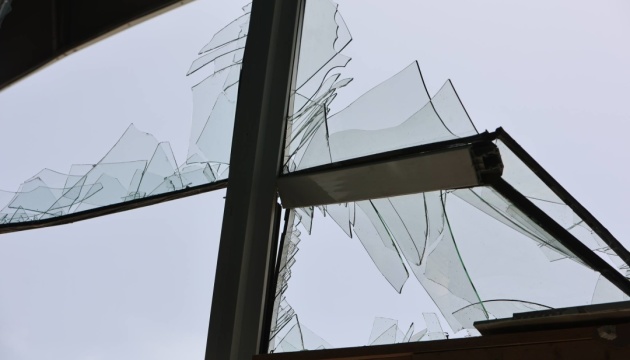
Nighttime drone attack on Kyiv region: Woman injured, houses damaged
A nighttime enemy drone attack in the Bila Tserkva district of the Kyiv region left a woman injured and caused damage to residential buildings.
 🎓Education
American Experience: Why the US Army is Adopting Ukrainian Drone Training Methods
A US Army representative visited the Ukrainian UAV academy Killhouse twice, prompting the US military to adapt its own training programs to real-world conditions.
 👥Society
How Much Water to Drink Daily for Healthy Blood Pressure: Cardiologists' Advice
Renowned cardiologists and vascular surgeons explain how proper hydration affects blood pressure and share recommended daily water intake amounts.